Showing posts with label France. Show all posts

Friday, July 29, 2011

The Many Glorious Shoes of Paris

This is the Holy Land, the city that shoe lovers all over the world dream about.  Paris is a great shopping mecca, with more stores per square mile than any other city in the world. But for shoe fanatics, it’s paradise. High fashion shoes for women prevail and the high heels match the high prices. Whet your appetite in the swanky shopping districts along the Avenue des Champs-Elysées, Avenue Montaigne, Louvre-Tuileries, and Place Vendôme. Don’t forget the funky independent designers in Abbesses, the Marais, and Saint-Germain-des-Prés.

The essential destination for any fashionista in Paris is Christian Louboutin's flagship store. There's always something magical about visiting the first/original flagship.

This cozy store displays one-of-a-kind shoes in an intimate, exhibit-like environment.
 Not only are the red-soled heels beautifully crafted and flattering, somehow the designer’s creations manage to be comfortable, too. With shoes lovingly presented on illuminated shelves, Louboutin’s Left Bank boutique looks more like an art installation than a shop.


Posted by Picasa

Monday, March 7, 2011

The Café Terrace At Night

Vincent van Gogh's The Cafe Terrace is one of the painter's most remarkable and famous works as well as the first in a trilogy of starlit skies.  More than one hundred years after Vincent painted it, the Cafe Terrace is still in Arles, now called the Cafe Van Gogh.

When you see the café today, the outside walls are bright yellow, which is what it looks like in the painting. But in Van Gogh’s time, they weren’t in fact yellow, but a dull sandy color like a neighboring building. The yellow in the painting is Van Gogh’s interpretation of the light cast by a big gas lamp. This was the painting he did with the candles stuck to his felt hat so that he could see his canvas.


The original The Café Terrace at Night is currently on display at the Kroller-Muller Museum in Otterlo, Netherlands.

Monday, January 24, 2011

Fromage - Reblochon

 Cheese monger Steve Jenkins, author of  The Cheese Primer, describes Reblochon as “a triumph of cheesemaking—its rind is like the velvet on a deer’s antler, its flavor like filet mignon.”  Reblochon (ruh-bloe-SHAW), which comes in 1”-high, 5 ½”-wide wheels, is a raw cow’s milk cheese from France that is aged about 50 days—ten days shy of the FDA's minimum requirement for legal sale in the U.S.

Reblochon comes only from the eastern slopes of the Haute-Savoie – plus one small adjacent valley in Savoie near the swiss border, high in the Alps. The cheese is made by mixing the milks of three different breeds of cow : abondance, tarine, and montbéliarde.

 The birth of this fascinating cheese is due to the ingenuity of the Savoie herdsmen. In the 13th century, the farmers were completely dependent on landowners who insisted that all the herd's milk was their property. At milking time, the herdsmen did not quite complete the milking. After the controllers had left, the herdsmen finished the milking.  From this the cheese was made with the creamy milk of a second milking. Reblochon derives from the word 'reblocher' which when literally translated means 'to pinch a cow's udder again'.

Friday, November 5, 2010

The Makers - Artoria Limoges

One of my personal favorites and easily distinguishable by bright, vivid paint colors is Artoria Limoges. Artoria has aquired exclusive licenses to retail some Disney and other copyrighted icons. Most Artoria Limoges boxes are numbered, limited editions in lots of 1000 or 2000. Artoria Limoges is the largest manufacturer of porcelain giftware in Limoges, France, located on the banks of the Vienne River. It has been a family-owned business for generations, and has become known for the outstanding quality and fine craftsmanship of its hand-painted Limoges boxes and other collectibles. Artoria performs all aspects of porcelain manufacture - sculpting, molding, finishing, decorating and accessorizing. Its artisans are among the finest in Limoges, and many are the sons and daughters of Artoria craftsmen. They also offer tours of their factory in Limoges.


The name Artoria was adopted in 1990. The factory was founded in 1957 by Robert de Merindol as Manufacture Nouvelle de Porcelaines. Merindol had been director for Camille Tharaud. The factory was expanded in 1959 (architect J. and J.L. Picot) and again in 1973 (by G. Boineau). R. de Merindol's son Thierry inherited the company in 1983, incorporated it in 1985, and changed the name to Artoria in 1990. The number of employees was 22 in 1965, 75 in 1988, 110 in 1990, 55 in 2003.


Artoria expanded to the USA in 1982 and opened a showroom in New York City in 1995. In 2005 American operations relocated to Northern New Jersey, actually five minutes from me in Morris County, to stop in and check them out is definitely on my 'to do'  list!.

Wednesday, August 25, 2010

Boulangeries in Paris

A Baguette, croissant, a pain au chocolat - are all a part of daily French life. Purchased in the morning before breakfast, and again in the evening before dinner. Often placed on Paris street corners, the city abounds with boulangerie - baker shops - of all different types and styles.
In America, most bakeries sell both bread and pastries. But in France, the two specialties aren’t always combined. Pastries are sold at pastry shops or patisseries, and bread is sold at bakeries or boulangeries.
Many of France’s best bakers are fourth or fifth generation, and baking is a well-respected craft in France. In fact, the French government confers a special designation – Meilleur Ouvrier de France (MOF) – on the most skilled practitioners.
The most revered bakery in Paris is Poilâne. Established in 1932 by Pierre Poilane, they still use a wood-burning oven that dates from 1789. Poilâne's bread has won him famous fans over the years: Frank Sinatra and Lauren Bacall used to enjoy a loaf from time to time, and Robert De Niro is a customer. The most devoted patron, however, is a gentleman in New York who wants to remain anonymous. In 1997, he agreed to pay Poilâne $100,000, asking that his children and grandchildren receive a loaf a week for the rest of their lives. "Can you imagine?" Poilâne says, with obvious pride. "In 50 years, he'll be dead, but his grandchildren will be feeding our bread to their children and explaining how they are eating the bread of their great-grandfather!"

Sunday, August 1, 2010

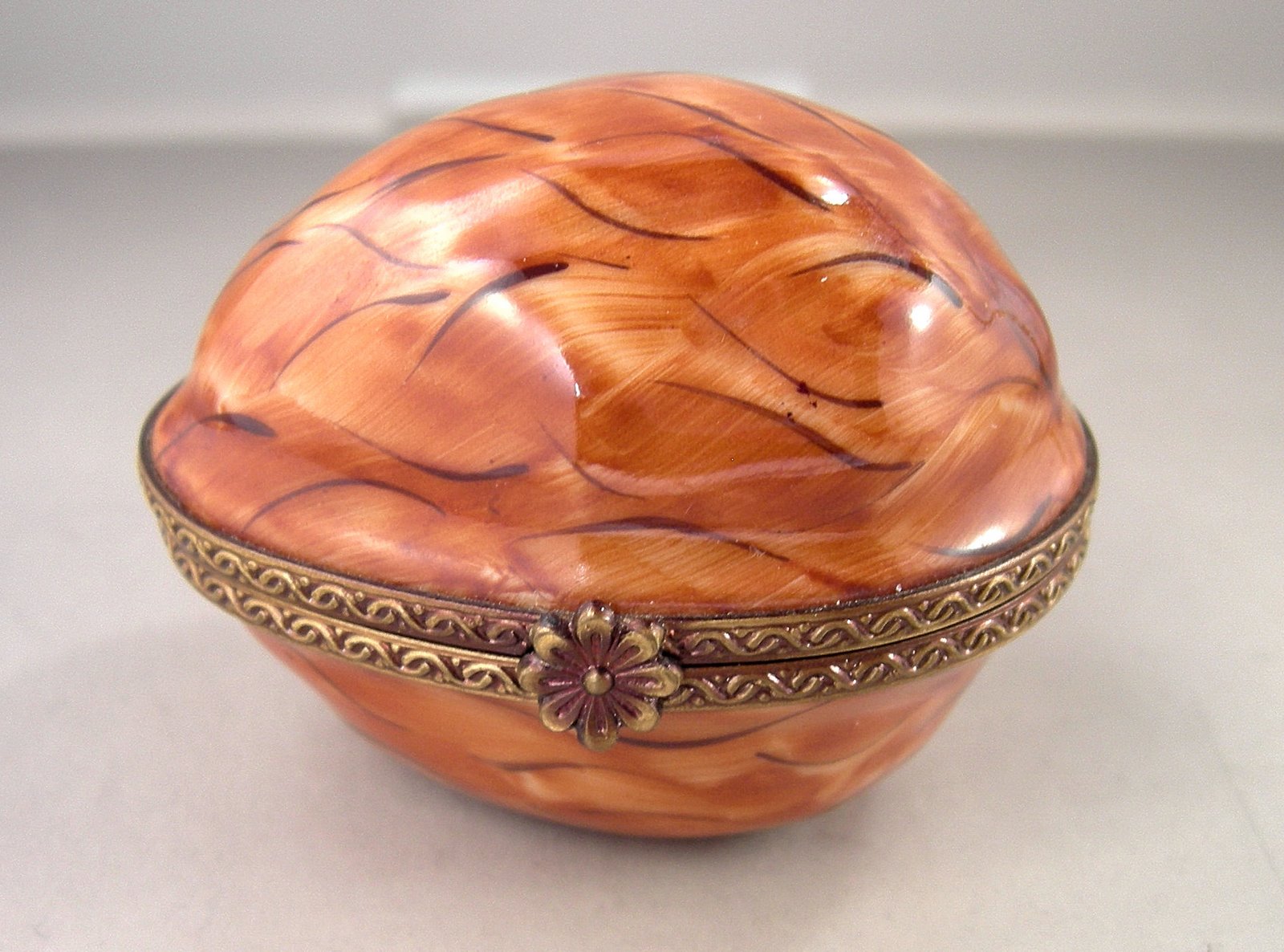
The Perigord Walnut


Perigord is the ancient name of the area that is also known as Dordogne in the Aquitaine region in the southwest corner of France. Drive through the valleys of the Perigord and you cannot help but be struck by the majestic groves of walnut trees that grace the landscape. Although the trees you see today are newer, there is evidence that the walnut has existed in this corner of the world for 17,000 years or more.

Denizens of the Perigord have the second-lowest rate of heart disease in the world despite living on a diet most would consider rich, and they ascribe their health and longevity in no small measure to the walnut, which is known to have cholesterol-lowering properties. High in potassium, zinc, and copper, walnuts impart energy, and rich in magnesium, they fight stress.

There is an old Perigordian axiom that nothing is lost of the walnut but the sound of its shell being cracked. Regional furniture has long been made from the hard, beautiful wood. Whole walnuts go to fine restaurants, where chefs combine them with butter and Roquefort and serve them as appetizers on thin slices of artisanal breads, tuck them into stuffings for baby duckling, and whip them into frozen mousses. Whole nuts are also used to make the delicious chocolate-dusted walnuts displayed in confectionary stores region-wide. Broken nuts head to the walnut mills and are pressed  into the sweet oil used in Perigord cooking and salad dressings; to distilleries like La Distillerie Roques in Souillac, where they metamorphose into aperitifs, digestifs, and liqueurs; and to small producers who turn them into delectable jams and spreads, often combined with local honeys. Nuts not good enough for these applications are ground and used in making walnut bread (a favorite accompaniment of pate de foie gras) and other confections.


And what to do with the mountains of shells when all the kernels have been picked? The locals grind them to use as kitty litter. You can pick up a sack at the Saturday market in Sarlat.


Thursday, April 22, 2010

Ronsard's Rose

Pierre de Ronsard (1524-1585) was one of the stars of the Pléiade, French humanists who were inspired by classical culture. His poetry is wonderfully musical, sensuous, pagan and romantic. His most famous sonnet, "Mignonne, allons voir si la rose", set to music, sung and recited by generations of schoolchildren, is an ode to Cassandra, the daughter of a wealthy Italian merchant. The theme is basically to enjoy your youth, as your life and youth is as ephemeral as the rose. Hence, live life today - Carpe Diem.         
This most diverse, accomplished, and influential poet of Renaissance France is the inspiration for the Ronsard Limoges pattern painted on porcelain as well as the Eden Ronsard Rose, a climbing, large old fashioned  double rose in pastel pink, cream and yellow.                       

Wednesday, March 17, 2010

The Glamorous Game of Roulette

There are many theories as to the origin of roulette. There are rumors that the game was invented in China and popularized in Europe by traders who were trading with the Chinese. However, most agree that the game did begin in France. In French, the word roulette means "small wheel". The idea of a spinning wheel with numbers may be old but evidence suggests that the first Roulette wheel was invented by the mathematician Blaine Pascal in 1655, who was supposedly inspired by his fascination with perpetual-motion devices. In 1842, fellow Frenchmen Francois and Louis Blanc added the "0" to the roulette wheel in order to increase house odds. Some call roulette the "King of Casino Games", probably because it was associated with the glamour of the casinos in Monte Carlo.

During the 20th century, roulette has remained a hugely popular casino game. From Las Vegas to France, roulette has retained its mystique as a glamorous game for high rollers.


Sunday, February 28, 2010

Grab the Brass Ring


The beginning of the carousel as we know it today most likely had its origin in France about 300 years ago. During that time, the French built a device to train young noblemen in the art of ring-spearing. The device consisted of carved horses and chariots suspended by chains from arms radiating from a centerpole. The object was to spear the ring. This is also the source of the phrase "grab the brass ring."

By the late 1700's there were numerous carousels built solely for amusement throughout Europe. It was apparent that other members of nobility, particularly ladies and children, and the general public were both eager to climb aboard this new "carrousel,'' (the device having taken the name of the royal pageants which inspired its creation.)  The advent of steam power made possible the more elaborate machines we now associate with carousels.


During the late 1800's, many skilled European carvers immigrated to the United States to produce carousels. The carvings of these immigrants were a great improvement over the first efforts of unskilled carvers. Usually the side of the carousel horse facing the audience, the "Romance" side, was adorned with carved decorations, while the inner side received little attention. The golden age of carousels only lasted 25 years, but still brings back wonderful childhood memories today.


Today, a number of charming carousels may be found in Paris.  Carousels may be found in the Jardin Des Tuileries, in the Parc du Champ de Mars, at bottom of the hill of Sacre Coeur in Montmartre, and in the Luxembourg Gardens.

Sunday, January 10, 2010

Apricot Confiture

Fresh apricots are plentiful and at the their peak in June in France. Apricot jam is one of the easiest jams to make because apricots have a medium amount of pectin so they do not tend to underset or overset. Jam making is a tradition well worth keeping when produce is in season to extend a little bit of summer all year long.


Apricot Confiture [kawn-fee-TYOOR] French for “jam” or “preserves”

2 1/2 pounds apricots, just ripe
3 cups granulated sugar
1/4 cup of water
1 lemon, juiced

Place a few small saucers in the freezer to use to check the setting point.
Cut the apricots in half and remove the pits. Reserve four or five pits, and discard the rest. Cut the apricots into 1-inch pieces. Wrap the pits in a kitchen towel, and hit them with a hammer to break the hard outer shell, but keep the soft inner seed, which resembles an almond, intact.

Note: In France, the apricot pits are used in confections and confiture for flavoring. Remove them from the jam before ladling them into the jars, however, as they are poisonous if eaten.

In a large heavy-bottomed pot or jam pan, combine the apricots, sugar, soft inner seeds and water. Stir to combine.
Bring to a boil, stirring constantly. Cook, stirring occasionally with a long wooden spoon skimming foam as necessary, until reduced and thickened, about 15 minutes. Stir in the lemon juice. Test the jam when the juice has thickened and the bubbles are large. The setting point has been reached when a drop placed on a chilled saucer forms a skin that is visible when lightly pushed. Remove from the heat and ladle into dry, warm jars and process as normal.


Saturday, November 28, 2009

The World's Most Famous Brandy - Cognac


Cognac is not just a drink, it's a city in southwest France that's filled with cobblestone streets, museums and shopping. And, of course, there's also cognac. The town of Cognac sits on the banks of the Charente River, about a three-hour TGV train ride southwest of Paris. The region may be known for its brandy, but you don't have to look far for its other charms.

The pace is enjoyably slow, the climate pleasantly mild. The river winds through the countryside, its tranquil waters reflecting images of vine-covered hillsides, small towns, well-tended farms and weathered châteaux framed by geraniums, pink roses and oleander bushes.

Tours of one of the great Cognac houses: Hennessy, Martell, Rémy Martin or Courvoisier range from about $10 to $25 --
including tasting... The region's Cognac houses play host to
about 200,000 visitors a year, many of them Americans.

All cognac is brandy, but not all brandy is cognac. Like champagne, cognac has to come from a designated area of France by law —the Charente region near Bordeaux. It is also made according to strict, legal guidelines. Once blended, cognac has to be matured in oak barrels for a minimum of two years. The spirit’s quality is measured by the average age of maturation—VS is usually aged 2 years and is perfect for mixing with soda, ginger ale or as part of a cocktail. VSOP (Very Special Old Pale) is aged around 4 years and can be enjoyed mixed or neat. The highest grade, XO (Extra Old), is aged a minimum of about 10 years and should be savoured on its own.
Posted by Picasa

Saturday, October 24, 2009

A French Potpourri


In early 17th Century France fresh herbs and flowers were gathered and used to make potpourri which was set out in special pots to perfume the air in their palaces and cottages. Potpourri is made by mixing oils, leaves, and/or dried flowers. When prepared, the mixture is enclosed in a bottle or jar, and allowed to sit for several weeks. During this time, the potpourri may smell rotten, however it soon improves.

The word "pot" in French has the same meaning
as it does in English, while the word "pourri" means rotten. The term "rotten pot" probably refers to some fermenting which may enhance the natural fragrances of a potpourri's ingredients.
In ceramics manufacturing, a potpourri vase is a vase specifically designed for holding potpourri. In the traditional designs a potpourri container is provided with a pierced fitted lid, through which the scent may slowly diffuse. This pretty potpourri diffuser is a trunk shaped Limoges Box made by Chamart with a porcelain top hand decorated with a pansy design and a pierced metal bottom in which to place scented potpourri.


Monday, October 12, 2009

Marché aux Puce St. Ouen - Paris

The marchés aux puces, or flea markets, of Paris are legendary. In fact, the name itself originated at the biggest and most famous, St.-Ouen, just outside the city’s ring road at Porte de Clignancourt, where back in the 1880s an “unknown bargain hunter” looked down from nearby fortifications, observed junk dealers selling scrap metal, rags and old furniture, and exclaimed, “My word, but it’s a market of fleas!”

The same vendors have occupied some of the market stalls for decades, even generations. The scale and scope of the entire Marche aux Puce is initially overwhelming, but actually quite manageable in one to two days. The great variety of items and styles, from all periods and countries as well as its unique atmosphere, put this spot at the forefront of the world's antiques markets. More than 2000 traders set up throughout the fifteen markets and in the many surrounding alleyways. The Marché aux Puces is not only very popular with the people accustomed to going there, but also with those who love to take a walk with a difference.

Thursday, October 1, 2009

France: The Oyster Capitol of the World


France and oysters go way back. Since Roman times, the coast of France has been the place of choice where prime oysters can be found. From North to South there are seven distinct growing regions: Normandy, North-Brittany, South-Brittany, West-Central, Marennes-Oléron, Arcachon, and the Mediterranean. Although some of these areas are far more famous than others, they all produce excellent oysters.

The European oyster (Ostrea edulis) is the native
oyster of France. It is called "Huître plate" or simply "Plate". The European oyster is often considered the classic oyster of France as well as the most expensive oyster in France (or in all of Europe for that matter).


The coast of France offers fantastic oyster experiences. Virtually anywhere along the
French coastline (including the Mediterranean) delicious oysters are served. Much like French wine growing areas, oyster cultivation areas are
often informally refered to as "crus". The best
part about the French coast is, however, the price of oysters. They usually cost half of what is charged in Paris.
As oysters go, the French have long been the undisputed leader in all of Europe. In France more than 143,000 tons of oysters are produced and eaten every year. It may take only about three seconds to swallow an oyster, but it takes three to four years to raise one. Like wine, oysters have different flavors depending on the region where they are raised.

Posted by Picasa

Thursday, September 24, 2009

Caviar Kaspia


A landmark at the Place de La Madeleine, since 1927, dining at Caviar Kaspia has been synonymous with luxurious pleasure and refinement.

Today this Parisian landmark has become the meeting point for writers, artists, food connoisseurs, fashion designers, influential style icons and Hollywood movie stars such as Valentino, Anna Wintour, Gwyneth Paltrow, Katie Holmes, Mick Jagger, Keanu Reeves and David & Victoria Beckham, who appreciate edible luxury of the finest quality.

It is a place of luxury and refinement with its
woodwork and old pictures, porcelains and art objects. The menu is an invitation to taste authentic flavors from the sea and from the land. In addition to caviar as the specialty of the house, a rare assortment of smoked fish, wild salmon, and duck Foie Gras are served. Vodka, the drink of choice at Kaspia, allies itself perfectly with caviar and over 100 different varieties are available.

The caviar jar pictured is actually a Limoges Porcelain Box from Eximious of London.


Saturday, August 22, 2009

Sunflowers


Fields of sunflowers are everywhere in the South of France – and not just growing in the ground. Provencal linens, pottery and tile seem to echo the bright blues and yellows that Van Gogh talked about when painting in the region.
The latin name for sunflowers is Helianthus annus – which comes from the greek word helios (sun) and anthus (flower).

The French word for sunflower is tournesol, and is literally a perfect translation. “Turn sun” illustrates the fact that young sunflowers orient themselves towards the sun, which is exactly what they do.
Provence is the land of Van Gogh – who lived in the area and was inspired by the light and the sunflowers as you may know from his famous sunflower series of paintings.


Saturday, August 8, 2009

La Maison des Trois Thés

Deep in the heart of Paris's Latin Quarter, lies a tea-house with more fabulously expensive tea than anywhere else.

La Maison des Trois Thes, an exclusive
tea shop and importer, supplies the
restaurant at the Four Seasons George V,
Pierre Gagnaire, Alain Senderens
and many other top Paris tables,
and is considered to be one of the four or
five most knowledgeable tea merchants
in the world.

The shop was born of Taiwan native
Yu Hui Tseng’s passion for tea.
Tseng comes from a family that’s
been in the business of growing
and selling quality tea for generations
and is considered to be one of the finest
tea tasters in the world. Among the
rarest types on sale are the very best
Oolong teas as well as an intriguing
selection of white, yellow, and aged
black teas.


Wednesday, August 5, 2009

Pizza can be French, too!

The nutty, buttery flavor of semi hard cheeses distinguishes much French pizza from Neapolitan-style pies made only with milky mozzarella. When the cheese is spread over a thin round of dough coated with tomato and herbs and then subjected to the relentless whoosh of heat in a brick oven, the result is a bubbling, molten masterpiece.
In the South of France, especially in Provence (pictured) and along the Côte d'Azur, they understand tomatoes, basil, olive oil and anchovies. The region's proximity to Italy and its influx of Italian immigrants, vacationers and retirees has, over the decades, provided a steady supply of pizza cognoscenti.

The divinely thin crusts constitute the hallmark of the best wood-fired French pizza: crisp but not hard, delicate but not brittle, charred but not burned, flour-powdered but not dry.
Posted by Picasa