Monday, March 30, 2015

Fleur-de-Lis

The Fleur-de-Lis, sometimes spelled Fleur-de-Lys, is rich in history and legendary. 

Representing either a lily, lotus flower or an iris, its motif comes from a distant past and to this day, remains a mystery as to its origins.

Traditionally, it has been used to represent French royalty, and in that sense it is said to signify perfection, light, and life. 


Tuesday, June 18, 2013

The Retailers - The Horchow Collection

Horchow was the first free-standing luxury catalog business in the United Stated not attached to a large store. The founder, Roger Horchow, published his first catalog in 1973, after graduating from Yale and working in retail at Neiman Marcus. He sold the catalog business to Neiman Marcus in 1988 and went on to become a Tony award winning Broadway producer.

Some famous clients include the Royal Family of Monaco, several Kennedys, Liza Minnelli and Robert Redford, who once ordered a gadget to kill bugs on his ranch.


Pictured is a dog bonbonniere from an early catalog along with two catalog covers from the late 1970's.


Wednesday, July 4, 2012

A Cornucopia of Clasps


Almost every Limoges Box has a decorative clasp that matches the theme of the piece, as well as the banding and serves a purpose...to keep the box closed with a 'snap'. These clasps come in a wide array of styles from simple round buttons, bows and hearts to the very elaborate, and all are slightly bent to catch the metal banding and close securely. Some collectors focus on the clasp and will purchase a piece simply because it has an unusual clasp.


This clasp is made from 24k gold plated sterling silver from Faberge and the design is the Romanov Double Eagle.


The French farmhouse theme is repeated here with this hen clasp from a box featuring a rooster.


This exquisite seahorse is found on an oyster box which opens to a 'pearl' inside and this bottle of French Chamagne has a bunch of grapes at the tip of the Eiffel Tower.

Friday, May 25, 2012

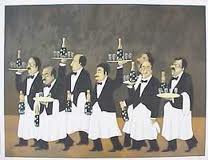
Guy Buffet & Those Whimsical French Waiters

French painter Guy Buffet is famed for his humorous & whimsical art, prints and posters of restaurant and bar scenes, featuring chefs, waiters and barmen, food and drink. He has been drawing and painting since childhood and grew up in a family who owned a restaurant in France. Guy has a huge following worldwide. Anyone who loves food and wine is likely to own at least one of his many licensed products, ranging from shoes, ties, shirts, kitchenware, books, calendars, and prints. Some of his most famous products were items produced for the culinary store Williams-Sonoma.
This Limoges box mixes the elegance of a fine work of art  with the whimsical humor reminiscent of Mr. Buffet's quirky paintings.


Wednesday, October 12, 2011

How to open your Limoges Box

How to Open Your Limoges Box
Before attempting to open your Limoges box, please carefully read these instructions:
  1. Make sure clasp on front of metal band is facing you.
  2. Place thumbnails in between the two halves of the metal bands.
  3. Gently pull thumbnails in opposite directions until box opens. The clasp is decorative only and does not cause the box to snap open or closed.
  4. NEVER pull on the porcelain to open the box. NEVER pull on the clasp. NEVER try to force the box open. NEVER use a knife blade or sharp object to open the box - it may scratch the rim or puncture your hand!
  5. Once opened, never pressure the hinge to go backwards if there is resistance... that is designed into the box. NEVER slam the box closed, as this may cause the porcelain to crack or break.
  6. Invariably, your friends will want to open your boxes, and that's generally asking for trouble. It's best if you open the box for your friend, and hand it to him or her open.

Friday, July 29, 2011

The Many Glorious Shoes of Paris

This is the Holy Land, the city that shoe lovers all over the world dream about.  Paris is a great shopping mecca, with more stores per square mile than any other city in the world. But for shoe fanatics, it’s paradise. High fashion shoes for women prevail and the high heels match the high prices. Whet your appetite in the swanky shopping districts along the Avenue des Champs-Elysées, Avenue Montaigne, Louvre-Tuileries, and Place Vendôme. Don’t forget the funky independent designers in Abbesses, the Marais, and Saint-Germain-des-Prés.

The essential destination for any fashionista in Paris is Christian Louboutin's flagship store. There's always something magical about visiting the first/original flagship.

This cozy store displays one-of-a-kind shoes in an intimate, exhibit-like environment.
 Not only are the red-soled heels beautifully crafted and flattering, somehow the designer’s creations manage to be comfortable, too. With shoes lovingly presented on illuminated shelves, Louboutin’s Left Bank boutique looks more like an art installation than a shop.


Posted by Picasa

Monday, March 7, 2011

The Café Terrace At Night

Vincent van Gogh's The Cafe Terrace is one of the painter's most remarkable and famous works as well as the first in a trilogy of starlit skies.  More than one hundred years after Vincent painted it, the Cafe Terrace is still in Arles, now called the Cafe Van Gogh.

When you see the café today, the outside walls are bright yellow, which is what it looks like in the painting. But in Van Gogh’s time, they weren’t in fact yellow, but a dull sandy color like a neighboring building. The yellow in the painting is Van Gogh’s interpretation of the light cast by a big gas lamp. This was the painting he did with the candles stuck to his felt hat so that he could see his canvas.


The original The Café Terrace at Night is currently on display at the Kroller-Muller Museum in Otterlo, Netherlands.

Monday, January 24, 2011

Fromage - Reblochon

 Cheese monger Steve Jenkins, author of  The Cheese Primer, describes Reblochon as “a triumph of cheesemaking—its rind is like the velvet on a deer’s antler, its flavor like filet mignon.”  Reblochon (ruh-bloe-SHAW), which comes in 1”-high, 5 ½”-wide wheels, is a raw cow’s milk cheese from France that is aged about 50 days—ten days shy of the FDA's minimum requirement for legal sale in the U.S.

Reblochon comes only from the eastern slopes of the Haute-Savoie – plus one small adjacent valley in Savoie near the swiss border, high in the Alps. The cheese is made by mixing the milks of three different breeds of cow : abondance, tarine, and montbéliarde.

 The birth of this fascinating cheese is due to the ingenuity of the Savoie herdsmen. In the 13th century, the farmers were completely dependent on landowners who insisted that all the herd's milk was their property. At milking time, the herdsmen did not quite complete the milking. After the controllers had left, the herdsmen finished the milking.  From this the cheese was made with the creamy milk of a second milking. Reblochon derives from the word 'reblocher' which when literally translated means 'to pinch a cow's udder again'.

Friday, November 5, 2010

The Makers - Artoria Limoges

One of my personal favorites and easily distinguishable by bright, vivid paint colors is Artoria Limoges. Artoria has aquired exclusive licenses to retail some Disney and other copyrighted icons. Most Artoria Limoges boxes are numbered, limited editions in lots of 1000 or 2000. Artoria Limoges is the largest manufacturer of porcelain giftware in Limoges, France, located on the banks of the Vienne River. It has been a family-owned business for generations, and has become known for the outstanding quality and fine craftsmanship of its hand-painted Limoges boxes and other collectibles. Artoria performs all aspects of porcelain manufacture - sculpting, molding, finishing, decorating and accessorizing. Its artisans are among the finest in Limoges, and many are the sons and daughters of Artoria craftsmen. They also offer tours of their factory in Limoges.


The name Artoria was adopted in 1990. The factory was founded in 1957 by Robert de Merindol as Manufacture Nouvelle de Porcelaines. Merindol had been director for Camille Tharaud. The factory was expanded in 1959 (architect J. and J.L. Picot) and again in 1973 (by G. Boineau). R. de Merindol's son Thierry inherited the company in 1983, incorporated it in 1985, and changed the name to Artoria in 1990. The number of employees was 22 in 1965, 75 in 1988, 110 in 1990, 55 in 2003.


Artoria expanded to the USA in 1982 and opened a showroom in New York City in 1995. In 2005 American operations relocated to Northern New Jersey, actually five minutes from me in Morris County, to stop in and check them out is definitely on my 'to do'  list!.

Thursday, October 14, 2010

The World's Most Famous Bookshop - Shakespeare & Co.

For half a century, a crowded bookshop set on the Left Bank opposite Notre-Dame, has offered food and a bed to penniless authors - the only rule is that they read a book a day. "Be not inhospitable to strangers lest they be angels in disguise" is the revered bookshop's motto. 

In 1951 after World War II , George Whitman a demobbed GI,  had decided not to return to America, had chosen Paris as his home and decided to open a bookstore. George opened his doors midday to midnight, and the deal then is the deal now: sleep in the shop, on tiny beds hidden among the bookstacks; work for two hours a day helping out with the running of the place; and, crucially, read a book a day, whatever you like, but all the way through, unless maybe it's War and Peace, in which case you can take two days.


George took in the beat poets Allen Ginsberg and Gregory Corso. Henry Miller ate from the stewpot, but was too grand to sleep in the tiny writers' room. Anaïs Nin left her will under George's bed. There are signed photos from Rudolf Nureyev and Jackie Kennedy, signed copies of Jack Kerouac and William Burroughs.

Thousands of people have come through his doors, slept in his shop, eaten at his table, and many of them still write to him, or return.

Sunday, September 19, 2010

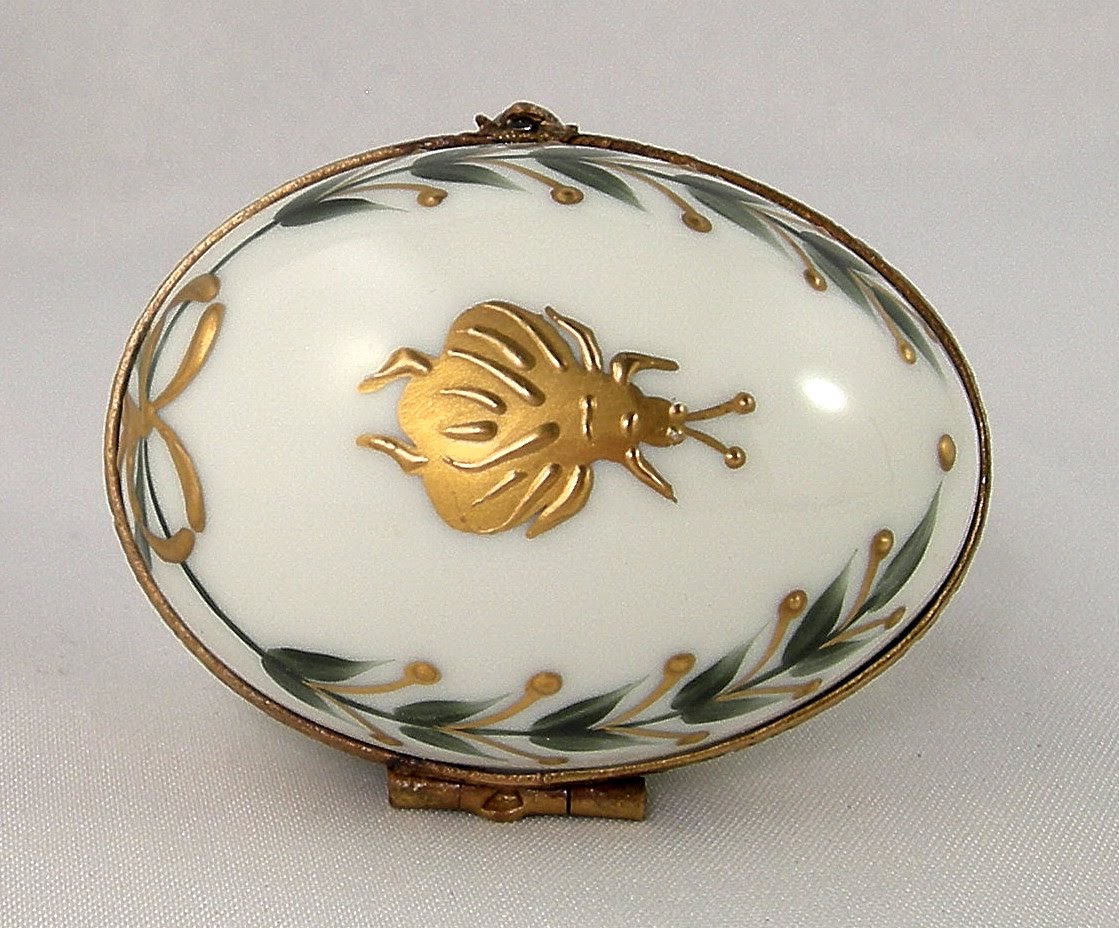
The Empire Bee

Napoleon I, Napoleon Bonaparte, has become a worldwide cultural icon who symbolises military genius and political power. The golden bee became the symbol of this iconic French Emperor.

There are several theories of how this came about. One interesting theory is when he overthrew the French government and took up residence in the Royal Palace at Tuileries he refused to spend money on new decor. However, he could not allow the curtains - with their embroidered fleur-de-lis (the French Royal emblem) - to continue to hang in the windows of the palace. His solution was to have the rich and elegant velvet drapes turned upside down. The inverted symbol of the overthrown monarchy looked like a bee.

Symbol of immortality and resurrection, the bee was chosen so as to link the new dynasty to the very origins of France. Bees have been featured in royal coats of arms in France since the Merovingian era. They were considered as the oldest emblem of the sovereigns of France.

Wednesday, August 25, 2010

Boulangeries in Paris

A Baguette, croissant, a pain au chocolat - are all a part of daily French life. Purchased in the morning before breakfast, and again in the evening before dinner. Often placed on Paris street corners, the city abounds with boulangerie - baker shops - of all different types and styles.
In America, most bakeries sell both bread and pastries. But in France, the two specialties aren’t always combined. Pastries are sold at pastry shops or patisseries, and bread is sold at bakeries or boulangeries.
Many of France’s best bakers are fourth or fifth generation, and baking is a well-respected craft in France. In fact, the French government confers a special designation – Meilleur Ouvrier de France (MOF) – on the most skilled practitioners.
The most revered bakery in Paris is Poilâne. Established in 1932 by Pierre Poilane, they still use a wood-burning oven that dates from 1789. Poilâne's bread has won him famous fans over the years: Frank Sinatra and Lauren Bacall used to enjoy a loaf from time to time, and Robert De Niro is a customer. The most devoted patron, however, is a gentleman in New York who wants to remain anonymous. In 1997, he agreed to pay Poilâne $100,000, asking that his children and grandchildren receive a loaf a week for the rest of their lives. "Can you imagine?" Poilâne says, with obvious pride. "In 50 years, he'll be dead, but his grandchildren will be feeding our bread to their children and explaining how they are eating the bread of their great-grandfather!"

Sunday, August 1, 2010

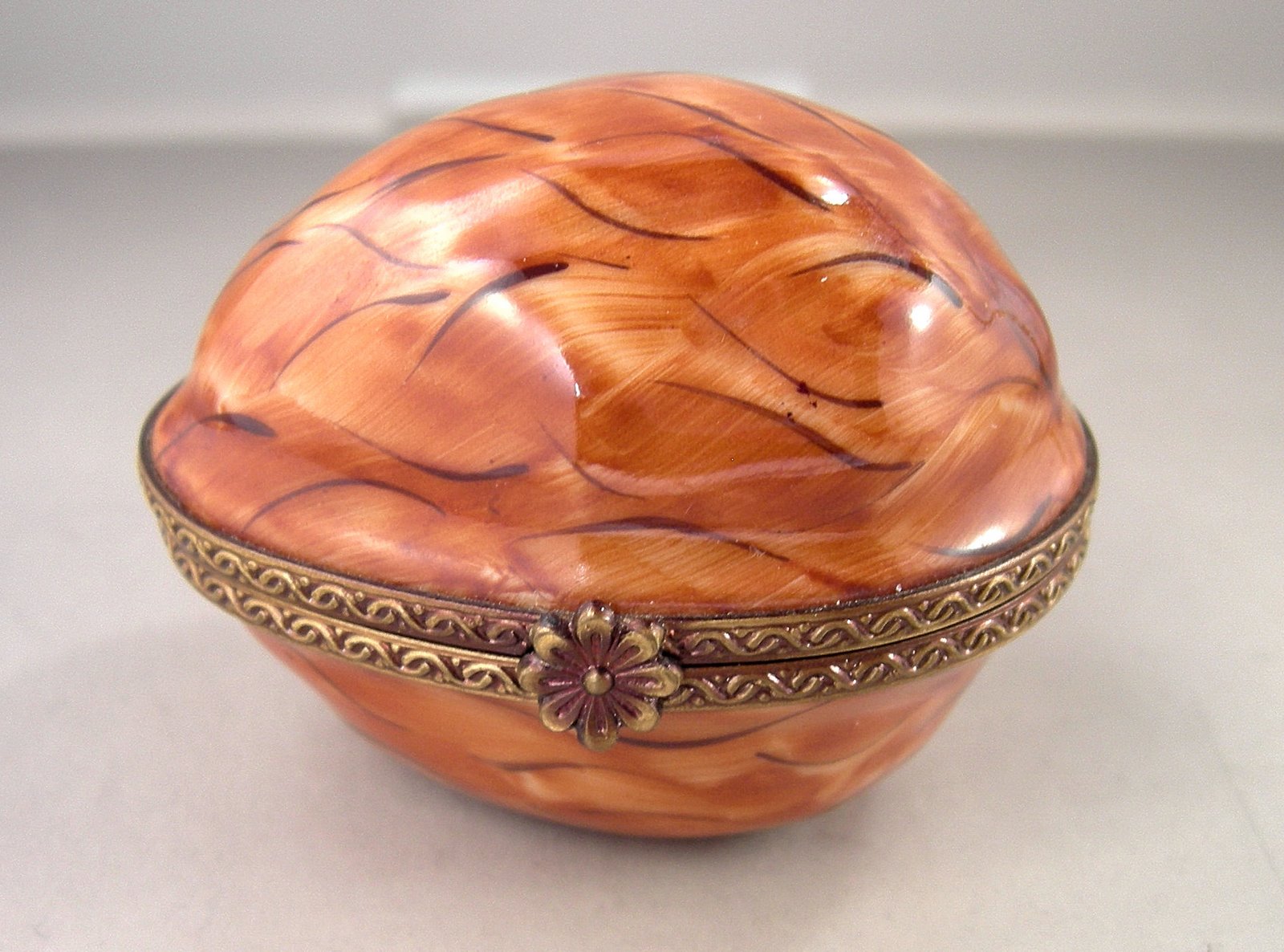
The Perigord Walnut


Perigord is the ancient name of the area that is also known as Dordogne in the Aquitaine region in the southwest corner of France. Drive through the valleys of the Perigord and you cannot help but be struck by the majestic groves of walnut trees that grace the landscape. Although the trees you see today are newer, there is evidence that the walnut has existed in this corner of the world for 17,000 years or more.

Denizens of the Perigord have the second-lowest rate of heart disease in the world despite living on a diet most would consider rich, and they ascribe their health and longevity in no small measure to the walnut, which is known to have cholesterol-lowering properties. High in potassium, zinc, and copper, walnuts impart energy, and rich in magnesium, they fight stress.

There is an old Perigordian axiom that nothing is lost of the walnut but the sound of its shell being cracked. Regional furniture has long been made from the hard, beautiful wood. Whole walnuts go to fine restaurants, where chefs combine them with butter and Roquefort and serve them as appetizers on thin slices of artisanal breads, tuck them into stuffings for baby duckling, and whip them into frozen mousses. Whole nuts are also used to make the delicious chocolate-dusted walnuts displayed in confectionary stores region-wide. Broken nuts head to the walnut mills and are pressed  into the sweet oil used in Perigord cooking and salad dressings; to distilleries like La Distillerie Roques in Souillac, where they metamorphose into aperitifs, digestifs, and liqueurs; and to small producers who turn them into delectable jams and spreads, often combined with local honeys. Nuts not good enough for these applications are ground and used in making walnut bread (a favorite accompaniment of pate de foie gras) and other confections.


And what to do with the mountains of shells when all the kernels have been picked? The locals grind them to use as kitty litter. You can pick up a sack at the Saturday market in Sarlat.


Tuesday, June 22, 2010

Chocolat de Paris


The art of chocolat is a high calling in Paris, with chic boutique chocolate shops all around town catering to the chocophile in search of new sensations. The best Paris chocolate shops are still generally small, family affairs, where techniques and recipes have been handed down through generations - and sometimes over the centuries. Their secret is simple: quality ingredients and painstaking workmanship. Shortcuts and easy methods are shunned.

Robert Linxe, proprietor of the Maison du Chocolate on the fashionable Rue du Faubourg St. Honore, is Paris's undisputed king of chocolate. His wares are very fine chocolates by which one may easily judge the others. All are made by hand, by Linxe and his assistants, in the basement of this former wine and spirits shop.


Taste them and you know what the French demand in chocolates: They are dark and strong, but not overwhelming, and neither bitter nor sweet, but a perfect compromise of flavors, shining with the glow of extra cocoa butter. They are unfussy and neat, and, best of all, they are smooth, with no hint of grit or grain.

Friday, May 14, 2010

The Faberge Imperial Pansy Egg

 
The House of Faberge produced it's most famous eggs for Alexander III and Nicolas II of Russia. These eggs are made of precious metals or hard stones decorated with combinations of enamel and gem stones. Of the 50 made, 42 have survived.

The 1899 Pansy Egg pictured here is formerly known as the "Spinach Jade Egg", is made of nephrite, silver-gilt, diamonds and enamels. This egg stands on golden twisted leaves from which five enameled pansy flowers and buds emerge. The top part of the egg can be opened to reveal the surprise, a gold tripod on which is located an heart lined in diamonds and surmonted by the imperial crown with eleven scarlet medallions decorated with monograms. By pressing a button the tiny medallions are all opened, and portraits of each member of imperial family become visible.

Originally presented by Nicholas II to Dowager Empress Maria Fyodorovna in 1899, this egg was one of the ten Eggs sold by the Antikvariat to the Hammer Galleries, New York in 1930.  In 1947, Matilda Geddings Gray, oil heiress, from New Orleans, Louisiana purchased this egg for her neice, Mrs. Matilda Gray Stream as a wedding anniversary present. The Pansy Egg is one of the few significant Imperial Eggs to remain in a private collection.

The House of Faberge recreated this exquisite egg in Limoges porcelain which retails today for an affordable $4000.


Thursday, April 22, 2010

Ronsard's Rose

Pierre de Ronsard (1524-1585) was one of the stars of the Pléiade, French humanists who were inspired by classical culture. His poetry is wonderfully musical, sensuous, pagan and romantic. His most famous sonnet, "Mignonne, allons voir si la rose", set to music, sung and recited by generations of schoolchildren, is an ode to Cassandra, the daughter of a wealthy Italian merchant. The theme is basically to enjoy your youth, as your life and youth is as ephemeral as the rose. Hence, live life today - Carpe Diem.         
This most diverse, accomplished, and influential poet of Renaissance France is the inspiration for the Ronsard Limoges pattern painted on porcelain as well as the Eden Ronsard Rose, a climbing, large old fashioned  double rose in pastel pink, cream and yellow.                       

Saturday, April 3, 2010

Sevres


Sevres porcelain is widely known to be both the French porcelain of royalty and the royal porcelain of France. King Louis XV, known as the most notable art patron in modern history, became the major customer and joined as a shareholder of the factory in 1745. The factory had a goal to deliver a superior product in order to compete with the early Meissen, Berlin, and other continental porcelains. By 1752, the king became the major shareholder. He deemed that this porcelain to be designated as royal, or Manufacturer Royale du Porcelaine. He conducted annual sales from his palace grounds at Versailles, encouraged his court and other royalty to buy his product, and even restricted other porcelain factories from using gilding or colored grounds on their porcelains.
When the operation ran into financial troubles in 1759, King Louis XV acquired the factory as royal property. The king took over the manufacturing operations, and considered himself the principal client and salesperson of these extraordinary porcelain creations. The factory was moved to the village of Sevres southwest of Paris; a location near to the palace of Versailles and close to the home of Madame de Pompadour at the Chateau de Bellevue. From that time the porcelain became officially known as Sevres porcelain.

The earliest Sevres had graceful shapes and soft colors. Sevres pieces produced from 1750 to 1770 were decorated with brilliant colors and heavy gilding. Many of these pieces had richly colored backgrounds and white panels painted with birds, flowers, landscapes, or people. Sevres is also noted for its fine figurines of biscuit (unglazed porcelain). The Sevres factory introduced hard-paste porcelain in the 1770s and soft-paste porcelain production ended in 1804.

The artists decorating many modern day Limoges boxes were inspired by the early intricate patterns and elaborate gilding of the Sevres era, thus the creation of pattern commonly known as Sevres. Pictured  is a modern example of a Limoges box from Limoges Imports - a footed urn. Also pictured is an example of what may have inspired the pattern: a Sevres Beau Bleu Dejeuner c1780, which sold for $6000 at Christies, New York in May 2008.