Sunday, September 19, 2010

The Empire Bee

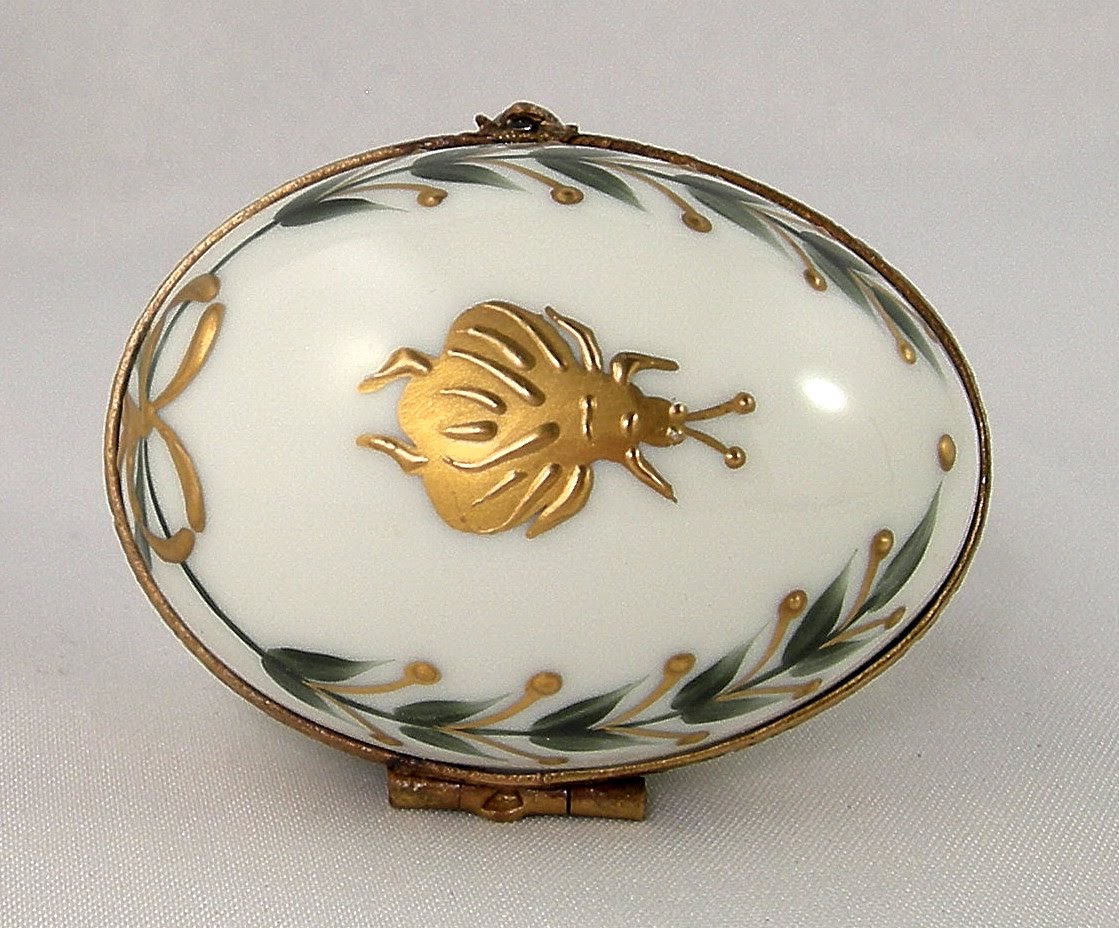
Napoleon I, Napoleon Bonaparte, has become a worldwide cultural icon who symbolises military genius and political power. The golden bee became the symbol of this iconic French Emperor.

There are several theories of how this came about. One interesting theory is when he overthrew the French government and took up residence in the Royal Palace at Tuileries he refused to spend money on new decor. However, he could not allow the curtains - with their embroidered fleur-de-lis (the French Royal emblem) - to continue to hang in the windows of the palace. His solution was to have the rich and elegant velvet drapes turned upside down. The inverted symbol of the overthrown monarchy looked like a bee.

Symbol of immortality and resurrection, the bee was chosen so as to link the new dynasty to the very origins of France. Bees have been featured in royal coats of arms in France since the Merovingian era. They were considered as the oldest emblem of the sovereigns of France.

Wednesday, August 25, 2010

Boulangeries in Paris

A Baguette, croissant, a pain au chocolat - are all a part of daily French life. Purchased in the morning before breakfast, and again in the evening before dinner. Often placed on Paris street corners, the city abounds with boulangerie - baker shops - of all different types and styles.
In America, most bakeries sell both bread and pastries. But in France, the two specialties aren’t always combined. Pastries are sold at pastry shops or patisseries, and bread is sold at bakeries or boulangeries.
Many of France’s best bakers are fourth or fifth generation, and baking is a well-respected craft in France. In fact, the French government confers a special designation – Meilleur Ouvrier de France (MOF) – on the most skilled practitioners.
The most revered bakery in Paris is Poilâne. Established in 1932 by Pierre Poilane, they still use a wood-burning oven that dates from 1789. Poilâne's bread has won him famous fans over the years: Frank Sinatra and Lauren Bacall used to enjoy a loaf from time to time, and Robert De Niro is a customer. The most devoted patron, however, is a gentleman in New York who wants to remain anonymous. In 1997, he agreed to pay Poilâne $100,000, asking that his children and grandchildren receive a loaf a week for the rest of their lives. "Can you imagine?" Poilâne says, with obvious pride. "In 50 years, he'll be dead, but his grandchildren will be feeding our bread to their children and explaining how they are eating the bread of their great-grandfather!"

Sunday, August 1, 2010

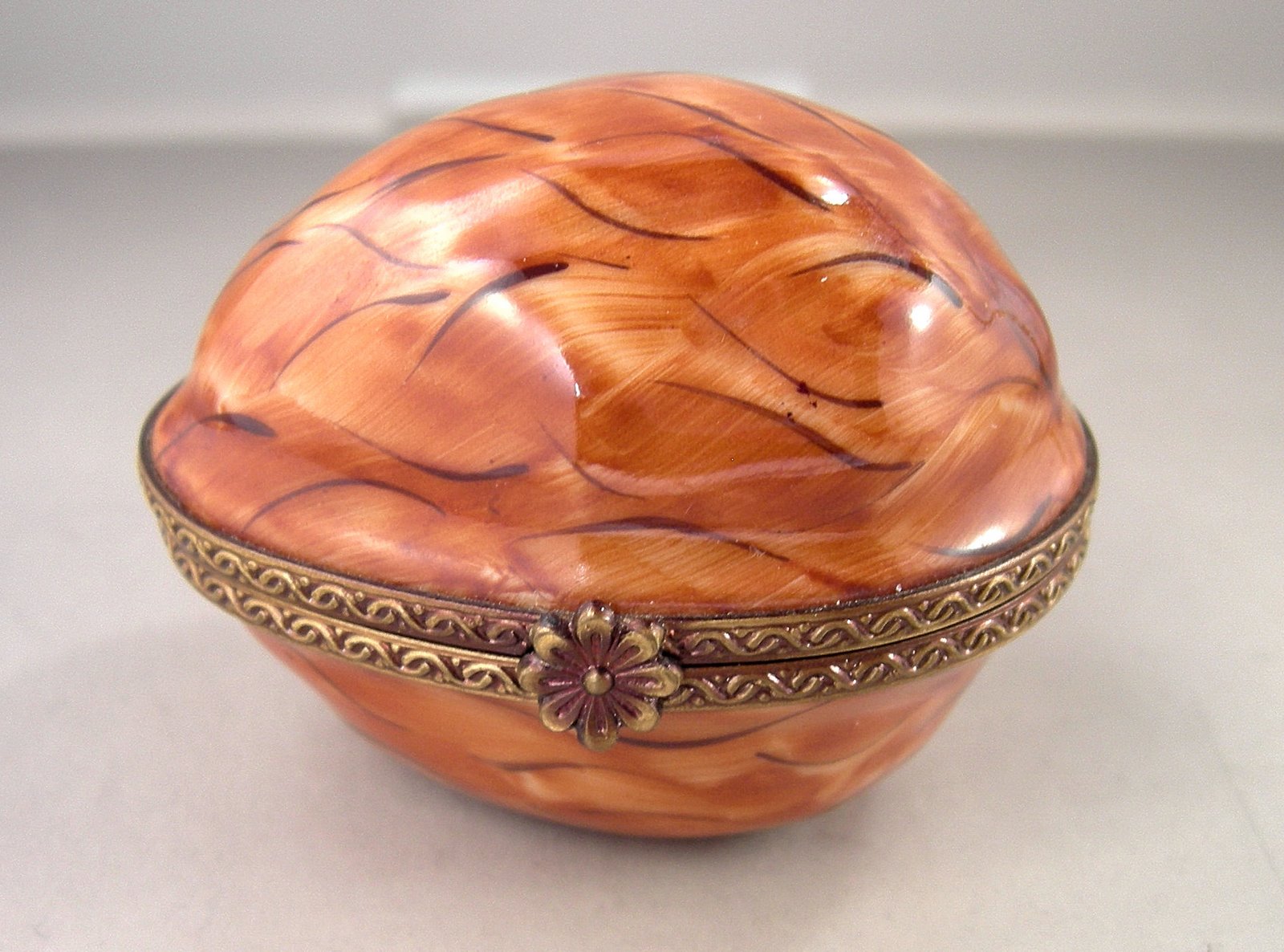
The Perigord Walnut


Perigord is the ancient name of the area that is also known as Dordogne in the Aquitaine region in the southwest corner of France. Drive through the valleys of the Perigord and you cannot help but be struck by the majestic groves of walnut trees that grace the landscape. Although the trees you see today are newer, there is evidence that the walnut has existed in this corner of the world for 17,000 years or more.

Denizens of the Perigord have the second-lowest rate of heart disease in the world despite living on a diet most would consider rich, and they ascribe their health and longevity in no small measure to the walnut, which is known to have cholesterol-lowering properties. High in potassium, zinc, and copper, walnuts impart energy, and rich in magnesium, they fight stress.

There is an old Perigordian axiom that nothing is lost of the walnut but the sound of its shell being cracked. Regional furniture has long been made from the hard, beautiful wood. Whole walnuts go to fine restaurants, where chefs combine them with butter and Roquefort and serve them as appetizers on thin slices of artisanal breads, tuck them into stuffings for baby duckling, and whip them into frozen mousses. Whole nuts are also used to make the delicious chocolate-dusted walnuts displayed in confectionary stores region-wide. Broken nuts head to the walnut mills and are pressed  into the sweet oil used in Perigord cooking and salad dressings; to distilleries like La Distillerie Roques in Souillac, where they metamorphose into aperitifs, digestifs, and liqueurs; and to small producers who turn them into delectable jams and spreads, often combined with local honeys. Nuts not good enough for these applications are ground and used in making walnut bread (a favorite accompaniment of pate de foie gras) and other confections.


And what to do with the mountains of shells when all the kernels have been picked? The locals grind them to use as kitty litter. You can pick up a sack at the Saturday market in Sarlat.


Tuesday, June 22, 2010

Chocolat de Paris


The art of chocolat is a high calling in Paris, with chic boutique chocolate shops all around town catering to the chocophile in search of new sensations. The best Paris chocolate shops are still generally small, family affairs, where techniques and recipes have been handed down through generations - and sometimes over the centuries. Their secret is simple: quality ingredients and painstaking workmanship. Shortcuts and easy methods are shunned.

Robert Linxe, proprietor of the Maison du Chocolate on the fashionable Rue du Faubourg St. Honore, is Paris's undisputed king of chocolate. His wares are very fine chocolates by which one may easily judge the others. All are made by hand, by Linxe and his assistants, in the basement of this former wine and spirits shop.


Taste them and you know what the French demand in chocolates: They are dark and strong, but not overwhelming, and neither bitter nor sweet, but a perfect compromise of flavors, shining with the glow of extra cocoa butter. They are unfussy and neat, and, best of all, they are smooth, with no hint of grit or grain.

Friday, May 14, 2010

The Faberge Imperial Pansy Egg

 
The House of Faberge produced it's most famous eggs for Alexander III and Nicolas II of Russia. These eggs are made of precious metals or hard stones decorated with combinations of enamel and gem stones. Of the 50 made, 42 have survived.

The 1899 Pansy Egg pictured here is formerly known as the "Spinach Jade Egg", is made of nephrite, silver-gilt, diamonds and enamels. This egg stands on golden twisted leaves from which five enameled pansy flowers and buds emerge. The top part of the egg can be opened to reveal the surprise, a gold tripod on which is located an heart lined in diamonds and surmonted by the imperial crown with eleven scarlet medallions decorated with monograms. By pressing a button the tiny medallions are all opened, and portraits of each member of imperial family become visible.

Originally presented by Nicholas II to Dowager Empress Maria Fyodorovna in 1899, this egg was one of the ten Eggs sold by the Antikvariat to the Hammer Galleries, New York in 1930.  In 1947, Matilda Geddings Gray, oil heiress, from New Orleans, Louisiana purchased this egg for her neice, Mrs. Matilda Gray Stream as a wedding anniversary present. The Pansy Egg is one of the few significant Imperial Eggs to remain in a private collection.

The House of Faberge recreated this exquisite egg in Limoges porcelain which retails today for an affordable $4000.